For my readers: If you come across words and phrases you don’t recognize, which I’m sure you will, I urge you to do your research. This set of reflective vignettes is my farewell to Muharrum, but perhaps my introduction to you. Meet me halfway.
Tonight marks the fortieth day following Ashura, chehlum in Urdu and arbaeen in Arabic, marking the transition of the immediacy of grief demanding to be felt, to the low, perpetual hum of remembrance. This is my remembrance.
Sakina:

Though the direct translation of the Arabic yateem is orphan, its Islamic connotation holds a differently tender, swollen definition: fatherless. There’s a deep isolation enmeshed with the word– it’s not common to be fatherless, and it’s certainly not an easy experience to share or understand. There has always been, however, one girl who was about my exact age when handed the title of yateem in a rude awakening. She is Bibi Sakina, the youngest daughter of Imam Hussain (AS), who was just four years old when her father was martyred in the Battle of Karbala. I clung to Sakina and her grief growing up– recollections of her pain were echoes of my own. I, too, longed for my father and to fall asleep on his chest. Her lamentations were my own: why, why, why. There were no adults to soften the blow of the tragedy for us, no preparation or guidance, no sugarcoating. Just one terrible and unescapable truth: my father has passed.
Tattoo Artist:
I have one tattoo, and no, it’s not related to Islam or Shiaism– that’s a different story. But anyway, I’m in my AirBNB in February 2024 in Rawalpindi, Pakistan during the solo part of my trip. Beyonce’s Renaissance is playing on rickety TV speakers and my tattoo artist is going on about his plans to move to Karachi that year, something about the vibrant culture and crowd down there calling to him. Besides the culture shock of that entire ordeal clenching my attention, my tattoo artist was sporting a necklace with the zulfiqar hanging from it. Classic Shia giveaway.
Awkwardly trying to be socially suave, I ask him if he’s Shia, expecting a straightforward answer. He laughs a bit and reveals that he wasn’t raised Shia but it called to him in adulthood. What a unique experience! Up until then, every Shia I knew was Shia by… well, birth. I pile questions onto him, curious to know how a sect so stigmatized invited him. I wish I could recall the exact conversation we had, but what I do remember is his understanding of Shiaism as heavily feminist. He rambled on about the women of Karbala, emphasizing their role in carrying the religion forward. I was ashamed to have never recognized how female-driven Muharrum is. Afterall, Bibi Zainab established the practice of majlis and masayab, fearlessly calling out against deception. Dying in martyrdom is a commendable act, but molding grief into a movement towards justice and truth lasting centuries, woven through generations is an act of its own tier. Only a woman of her caliber could do that. Of course, my tattoo artist did nudge at the more traditional, popular notions and lessons of Karbala/the Ahlul-Bayt. The bravery, resilience, and unwavered faith. Fighting against the odds for the simple fact of its-just-the-right-thing-to-do.
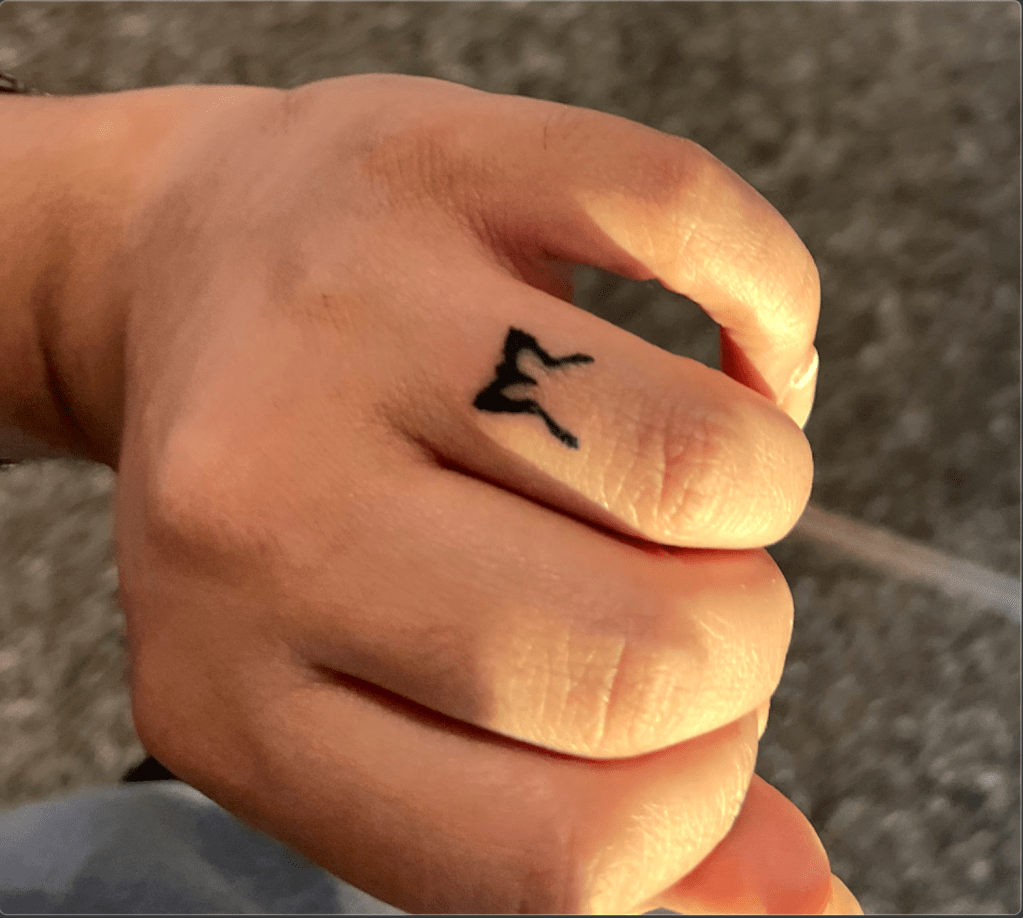
I’m sure if my tattoo was more elaborate (or just bigger than an inch, really) I’d have had the chance to hear more about my artist’s deeper, more personal connection to Ahlul-Bayt and the Shia faith in general. Regardless, the intrinsic human relevance of the Ahlul-Bayt and the Battle of Karbala became undeniable to accept. It really is for anyone searching for strength and an example of resilience. I am lucky to be born into the faith, and he is lucky to discover it.
I’m excited to discover it some more.
Nana Abu:
I’ve often been made to feel that I’m somehow less than for not being a Syed. I’ve never questioned it though, I just assumed Shiaism and moreso, Islam, boasts a large population– there ought to be some branching out. And I also assumed that the branching out happened way back in my lineage, maybe some forgotten and unnameable relative dating back generations had a revelation of connection to the Ahlul-Bayt, or maybe accidentally hung out with a different crowd for too long.
I was entirely wrong about the latter. It was Nana Abu.
Sometime during my visit home for the first ten days of Muharrum this year, I was lightly poking fun with my mother about some recent stereotypes I’ve learned about Shias. Apparently, one of our secret ingredients in haleem is children and babies (yum!). My mother was giggling, sharing some stuff she was teased about Shias by her non-Shia cousins. This isn’t a new concept for me, my extended family is beautifully embellished with a variety of religions and beliefs. However, as tendency has it, I asked “Huh? Why?”
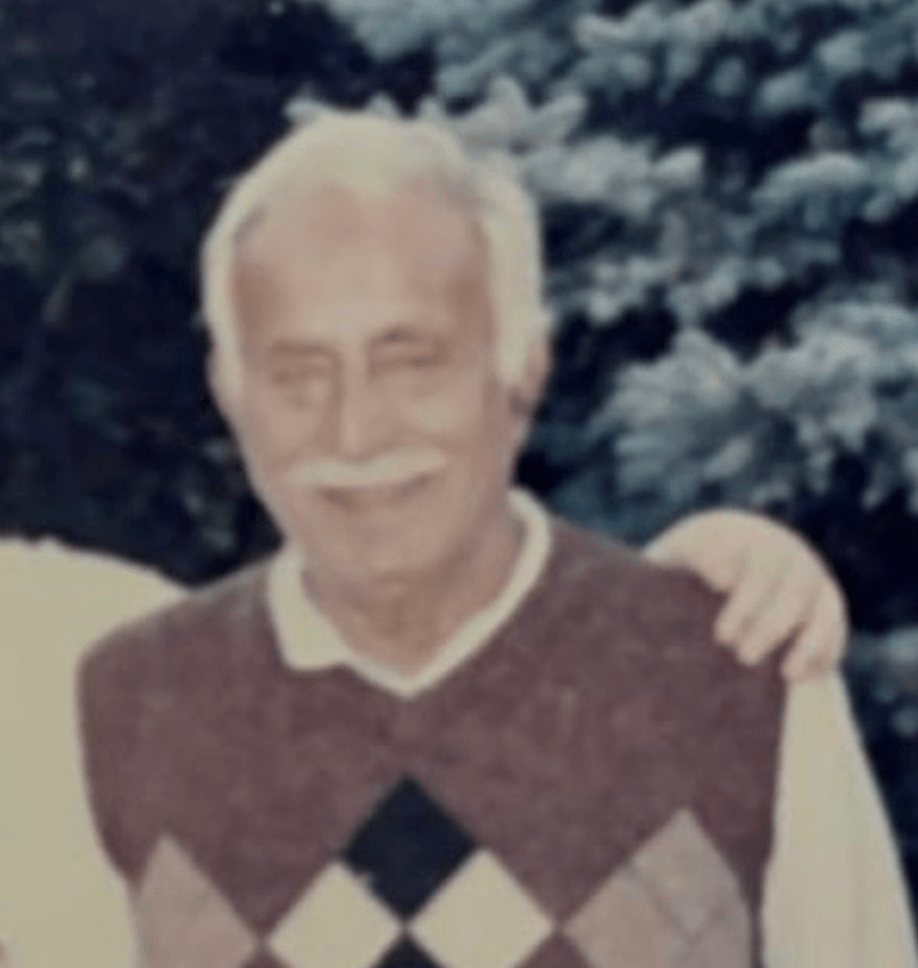
Nana Abu, resident of Amritsar pre-Partition was a Shia convert, the only one in his family. Similarly to my tattoo artist, Shiaism invited Nana Abu later in life. I wish I had had the chance to poke and prod his mind about this, but he was long gone by the time I came around. A strange, easing strength came into me learning that I’m just the third generation of Shia in my lineage.
What I have felt so strongly, so deeply about the Ahlul-Bayt is not by lineage and mechanically passed down, but intentionally pursued and adopted. There is something that my Nana Abu recognized in the faith that I am now just beginning to come to, some odd decades later. For me it has been Sakina, and more recently the resilience of the Ahlul-Bayt. I wonder what it was for him.
Alvida, Muharrum. ‘Til next time.
 brownofthehash